







NEWS LIST /NEWS LIST
The Hidden Energy Vampire in Your Pipes: Why Smart Engineers Are Switching to Ball Check Valves for Green Compliance
author:weitaifluid date:2026-01-29 18:01:07 Hits:124
Introduction:Advanced ball check valve designs eliminate hydraulic drag, protect pump infrastructure, and significantly reduce industrial carbon emissions.
In the global race toward Net Zero emissions, industrial facility managers and municipal engineers are leaving no stone unturned. They scrutinize high-efficiency motors, install variable frequency drives (VFDs), and optimize pump schedules. Yet, a massive source of energy inefficiency often remains hidden in plain sight, buried beneath the facility floor or bolted between flanges: the humble check valve.While these components are essential for preventing backflow, traditional designs act as parasitic loads on pumping systems. As one of the leading check valves manufacturers, the industry has observed that outdated valve technology can account for a startling percentage of a system’s total energy consumption. When a valve creates unnecessary resistance, the pump must draw more electricity to overcome it. This article adopts a third-party engineering perspective to dissect the physics of flow resistance, the benefits of the HQ41X design, and why modernizing your valve strategy is the low-hanging fruit of industrial sustainability.
The Physics of Profit Loss: Understanding Head Loss
To comprehend the magnitude of the problem, one must first understand the concept of Head Loss. In fluid dynamics, head loss represents the reduction in total head (sum of elevation head, velocity head, and pressure head) of the fluid as it moves through a system. This loss is primarily due to friction against pipe walls and the turbulence caused by fittings and valves.
The Flaw in Traditional Swing Valves
For decades, the swing check valve has been the standard. It relies on a heavy disc suspended from a hinge pin. Even in the fully open position, this disc floats in the fluid stream. The water is forced to divert around the obstruction, creating eddies, vortices, and turbulence immediately downstream.
From an energy perspective, this turbulence is disastrous. It represents kinetic energy that is converted into useless heat and vibration rather than fluid movement. The pump does not just push water; it fights the valve. If a valve generates a pressure drop of just a few PSI (Pounds per Square Inch), the pump must work harder to maintain the desired flow rate. This phenomenon creates a permanent, parasitic load on the electrical grid.
The Cumulative Impact
It is easy to dismiss a small pressure drop as negligible. However, in continuous-duty applications like wastewater treatment or municipal water supply, these small inefficiencies compound. A pump running 24/7 fighting a restrictive valve burns thousands of excess kilowatt-hours (kWh) annually. This is not merely a financial loss; it is a direct contributor to Scope 2 greenhouse gas emissions.
The Engineering Solution: The Ball Check Valve Revolution
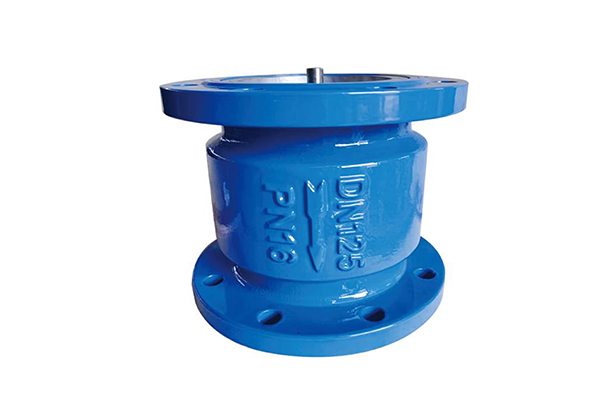
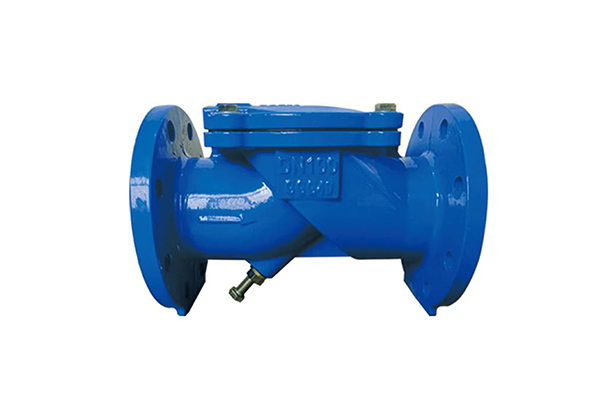
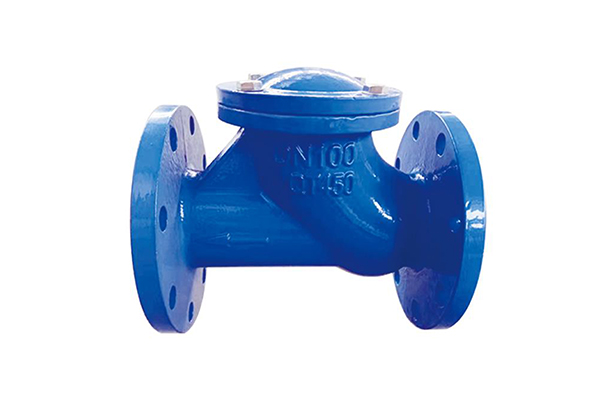
The industry response to this inefficiency is the Ball Check Valve, specifically designs like the HQ41X series. This technology addresses the root cause of head loss: flow obstruction.
The Full Bore Geometry
The most significant innovation in valves like the HQ41X is the Full Bore design. Unlike the swing check valve, where the closure mechanism remains in the flow path, the ball check valve features a specially designed lateral cavity. When the pump engages and pressure builds, the ball is pushed completely out of the main waterway and into this recess.
The result is a flow path that mimics a straight pipe. The fluid encounters almost zero mechanical resistance. There is no disc to navigate around, no spring to compress, and no hinge to create drag. By removing the physical barrier, turbulence is minimized, and the flow remains laminar.
Material Science and Durability
Top-tier Ball check valve manufacturers utilize advanced materials to ensure longevity. The body is typically cast from Ductile Iron (GGG40/50), known for its high tensile strength and resistance to mechanical stress. The ball itself is a marvel of simple engineering; it is usually a hollow steel sphere (for buoyancy) encapsulated in NBR (Nitrile) or EPDM rubber.
This rubber coating serves two purposes. First, it provides a bubble-tight seal even at low back pressures, preventing the leakage that often plagues metal-seated valves. Second, it offers exceptional resistance to abrasion, allowing the valve to handle slurries and grit without eroding.
Deep Dive: The HQ41X and the Carbon Equation
Let us quantify the environmental argument. Sustainability is no longer just a buzzword; it is a metric that demands data. By switching from a high-resistance swing valve to a low-resistance HQ41X unit, engineers can alter the system curve of their pumping station.
The Calculation Model
Imagine a typical sewage lift station with a 100kW pump operating 20 hours a day.
· Scenario A (Swing Valve): High head loss requires the pump to operate at 95kW to maintain flow.
· Scenario B (HQ41X Ball Valve): Low head loss allows the pump to deliver the same flow at 92kW.
The difference is 3kW. It seems small until multiplied by time:
· 3kW x 20 hours = 60 kWh saved per day.
· 60 kWh x 365 days = 21,900 kWh saved annually.
The CO2 Reduction
Using the global average carbon intensity of electricity (approximately 0.475 kg CO2 per kWh), this single valve replacement prevents over 10,000 kg (10 metric tons) of CO2 from entering the atmosphere every year. This is the equivalent carbon sequestration of about 500 mature trees.
When scaled across an entire municipality or a large industrial plant with dozens of pumps, the environmental impact becomes massive. This data is critical for companies publishing ESG (Environmental, Social, and Governance) reports. Using energy-efficient valves like the HQ41X is a verified method to lower operational carbon footprints without compromising performance.
Beyond Energy: The Operational Benefits
While energy savings are the headline, the operational advantages of the ball check valve are what keep plant managers sleeping soundly at night.
1. The End of Water Hammer
Water hammer is the destructive pressure surge caused when a fluid in motion is forced to stop or change direction suddenly. In traditional valves, the heavy metal disc slams shut against the seat when the pump stops, sending a shockwave through the piping. This can rupture pipes, damage gaskets, and destroy pump seals.
The HQ41X solves this through the "Rolling Principle." When the pump stops, the ball does not slam; it rolls back to the seated position. The rubber coating absorbs the impact, and the closing action is dampened by the fluid itself. This creates a "soft close" effect, significantly reducing noise and eliminating the dangerous pressure spikes associated with water hammer.
2. Self-Cleaning for Wastewater
Sewage is a difficult medium. It contains rags, wipes, plastics, and grit. Swing valves are notorious for clogging because debris gets caught on the hinge pin or wedged under the disc.
The ball check valve is inherently self-cleaning. As the ball rotates freely during operation, it prevents debris from adhering to its surface. There are no sharp edges or internal protrusions to snag fibrous materials. This makes the HQ41X the preferred choice for submersible sewage pumps and wastewater treatment plants where reliability is non-negotiable.
Strategic Implementation in Modern Infrastructure
Integrating these valves into a system requires understanding their best applications.
· Vertical vs. Horizontal: One of the common misconceptions is that check valves are orientation-limited. The HQ41X performs exceptionally well in vertical lines (upward flow) as gravity naturally assists the seating of the ball. In horizontal lines, the internal geometry guides the ball, ensuring a positive seal.
· Low Pressure Systems: Because the ball is lightweight and buoyant, it requires very little cracking pressure to open. This makes it ideal for gravity-fed systems or low-head applications where heavy swing valves might restrict flow too much.
FAQ: Frequently Asked Questions
Q: Can the HQ41X Ball Check Valve be used for potable water systems?
A: Yes, provided the rubber coating on the ball is made of EPDM or other food-grade materials that meet sanitary standards. The full-bore design is excellent for maintaining water pressure in high-rise buildings.
Q: How often does the ball need to be replaced?
A: The life expectancy of the ball is significantly longer than the hinge mechanisms of swing valves. Since the ball rotates, wear is distributed evenly across its entire surface rather than concentrated on a single contact point. In normal operating conditions, the ball can last for many years without replacement.
Q: Is there a risk of the ball getting stuck in the side cavity?
A: No. High-quality designs like the HQ41X feature a precisely cast track that guides the ball in and out of the flow. The hydrodynamics ensure that as soon as flow stops, the ball is pushed back into the seated position by backpressure and gravity.
Q: How does the cost compare to traditional valves?
A: While the upfront cost might be slightly higher than a basic swing valve, the Total Cost of Ownership (TCO) is lower. The savings in electricity (due to lower head loss) and maintenance (due to clog resistance) typically provide a Return on Investment (ROI) within 12 to 18 months.
Q: What represents the biggest threat to these valves?
A: Extremely high temperatures or aggressive chemicals that are incompatible with the specific rubber coating (NBR/EPDM) are the main limitations. It is crucial to match the elastomer material to the fluid properties.
Conclusion
The industrial sector is undergoing a paradigm shift. The focus has moved from merely moving fluids to moving them intelligently and sustainably. The "invisible" components of the piping network are now being recognized as critical control points for energy efficiency.
The HQ41X Ball Check Valve represents a convergence of simple physics and modern sustainability goals. By eliminating the drag inherent in older valve designs, it transforms the piping system from an energy burden into an efficient conduit. For facility managers, the choice is clear: stick with the status quo and pay the price in higher electric bills and maintenance, or upgrade to a solution that respects both the budget and the environment.
When selecting components for your next project, look for manufacturers who understand this balance. Brands that prioritize hydraulic efficiency, such as Weitai, are helping to drive this green transition, offering products that define the future of fluid control.
References
World Trade Hub. (2026). Ball check valves: Enhancing flow efficiency in industrial systems. https://www.worldtradhub.com/2026/01/ball-check-valves-enhancing-flow.html
Vogue Voyager Chloe. (2026). The strategic advantages of using one-way check valves in modern plumbing. https://www.voguevoyagerchloe.com/2026/01/advantages-of-using-one-way-check-valve.html
Cross Border Chronicles. (2026). A global overview of non-return valve solutions for sustainable infrastructure. https://www.crossborderchronicles.com/2026/01/overview-of-non-return-valve-solutions.html
Environmental Protection Agency. (2024). Energy efficiency in water and wastewater facilities. https://www.epa.gov/sustainable-water-infrastructure
Val-Matic Valve & Mfg. Corp. (n.d.). Design and benefits of ball check valves in high head applications. https://www.valmatic.com/products/check-valves/ball-check-valves